Campaign Legal Center, CREW file brief opposing ballroom
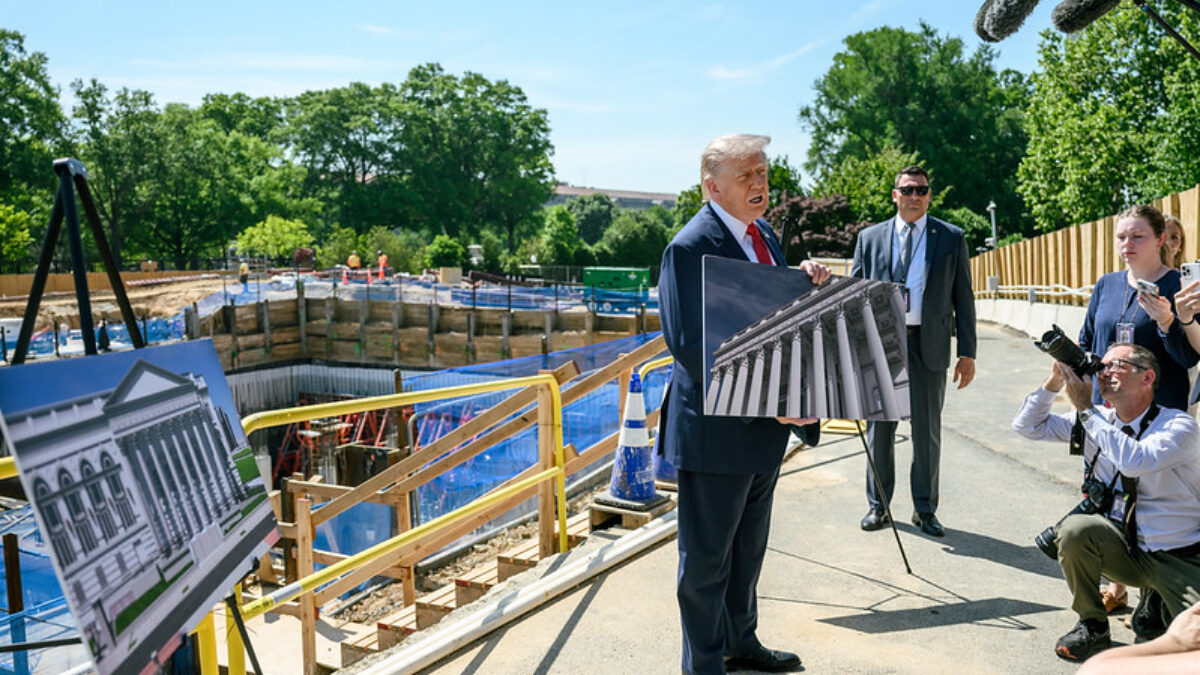
On May 27, 2026, Campaign Legal Center (CLC) and Citizens for Responsibility and Ethics in Washington (CREW) filed a friend-of-the-court brief highlighting how special interests have received political favors in return for their contributions to entities affiliated with President Donald Trump, and the similar dangers posed by donations to the East Wing ballroom.
Congress—not the president—has the power of the purse, and it has neither authorized nor appropriated this type of spending. The brief calls on the court to halt construction of President Trump’s East Wing ballroom to prevent quid pro quo corruption and ensure that the administration does not fundamentally transform one of the nation’s landmarks without the input of Americans’ representatives in Congress.
“President Trump’s private funding scheme for his proposed East Wing ballroom creates a substantial risk of quid pro quo corruption, and even the appearance alone of such corruption erodes trust in our government,” said Dan Lenz, senior legal counsel for strategic litigation at Campaign Legal Center. “Congress, not the president, is empowered to raise and spend public money—and it has not authorized the ballroom. The administration’s reliance on private donor funding for the ballroom project violates a core principle of separation of powers embedded in our constitution.”
“Throughout his second term, President Trump has created multiple vehicles for pay-to-play access with little regard for the law or the American people,” said Nikhel Sus, chief counsel at CREW. “Private fundraising without appropriate oversight or transparency is not an effort to save taxpayer money. It’s an effort to circumvent Congress and leave the public in the dark. The Court of Appeals should affirm the district court’s preliminary injunction.”
CLC and CREW have both urged accountability on this private funding scheme because it disrupts public disclosure of who is funding our government and what those donors receive in return. President Trump has raised nearly $400 million in support of this project from major donors, including Coinbase, Ripple and Lockheed Martin. These companies and other donors also have significant interests that are already before or likely to come before the federal government, and their funding of the president’s legacy project calls into question whether those interests will be improperly protected or favored.
Respecting the separation of powers is essential to preventing this kind of corruption. Without requiring Congress’ approval for this type of spending, special interest donors can leverage private funding to shape federal policy for their own benefit.