CREW files First Circuit amicus brief supporting Harvard’s ability to host international scholars and students
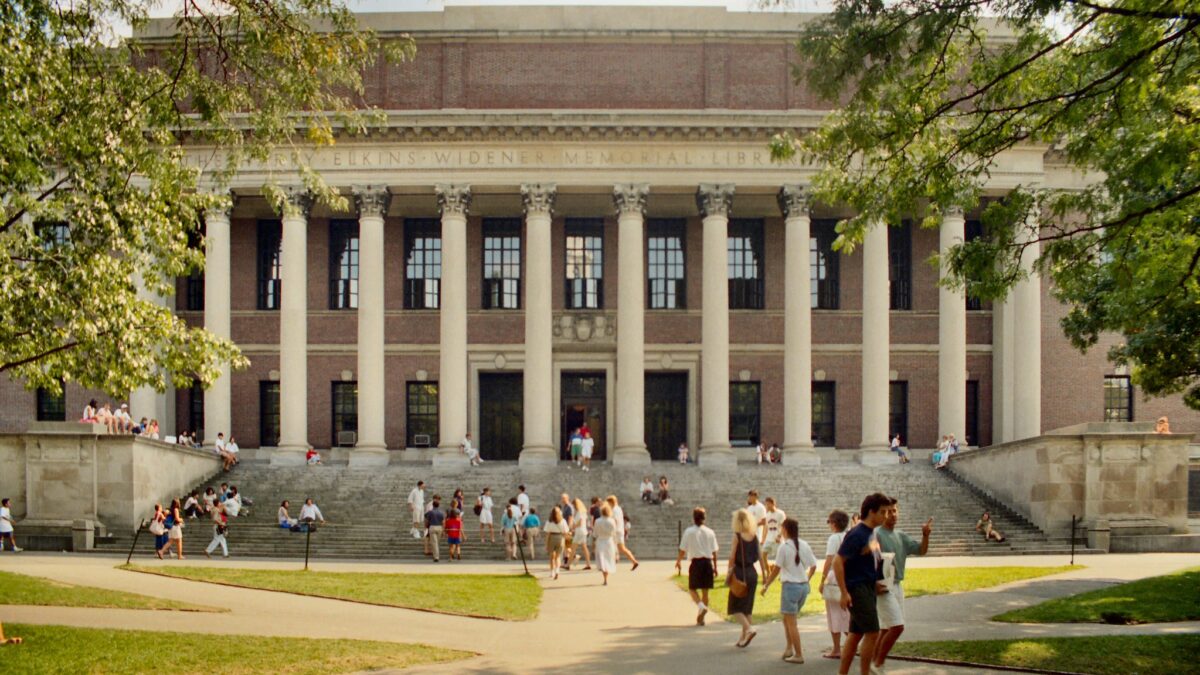
The U.S. Court of Appeals for the First Circuit should reject the Trump administration’s efforts to restrict Harvard from hosting international scholars and students, according to an amicus brief filed by CREW on behalf of the American Historical Association and other scholarly associations.
American colleges and universities have long welcomed and benefitted from cross-border scholarly exchanges. Each year, tens of thousands of international scholars on J-1 and other non-immigrant visas enter the U.S. to research, teach and engage in other academic work, and hundreds of thousands of international students come to study at U.S. colleges and universities.
Harvard and other U.S. colleges and universities sit at the top of world rankings for best schools, and their success stems from in no small part from their ability to attract the very best scholars and students from around the globe. These schools’ engagement and collaboration with international students and scholars bring unique perspectives to laboratories, research centers, archives and classrooms. Moreover, international scholars and students undergird the U.S. science and engineering sectors in particular, and they annually contribute billions of dollars to the economy in addition to creating hundreds of thousands of jobs.
The amicus brief outlines how the Trump administration’s actions have harmed international scholars and students. Trump attempted to revoke Harvard’s certification to host international students on F-1 visas and sought to prevent Harvard from enrolling these students or hosting international scholars on J-1 visas by suspending their entry and directing the Secretary of State to consider revoking their existing visas. The administration has portrayed these students and scholars as potential agents for foreign adversaries who unfairly reduce opportunities for hardworking Americans, calling them “agitators” and “radicalized lunatics, [and] troublemakers” responsible for antisemitism, misconduct, and criminality.” These actions and characterizations have snuffed out free expression, creating a climate of fear, repression, and self-repression for international scholars and students at Harvard and elsewhere. International scholars and students worry that what they say in classrooms, write in scholarly works or advocate for in public could be used as grounds to revoke their visas and upend their careers. As a result, a growing number of international scholars are leaving or considering leaving the U.S., with some opting not to come to the U.S. in the first place.
The Trump administration’s attack on Harvard’s ability to host international scholars and enroll international students is unlawful and violates the First Amendment. Just as Harvard has a First Amendment right to academic freedom as an institution, its scholars and students, including those from abroad have corresponding individual rights. Like Harvard, scholars and students are being singled out and retaliated against for being too “radical” or foreign-aligned for no legitimate reason—for purported crime rates that have nothing to do with them and for purported concerns that do not justify a categorical ban of people from abroad who want to come to Harvard.
Our country benefits tremendously from the wealth of knowledge and insight that international scholars and students bring. The Trump administration’s actions against Harvard jeopardize those contributions and lack a legal basis. The courts should accordingly reject the Trump administration’s attempts to prevent Harvard from hosting international students and scholars and rule in Harvard’s favor.
The American Council of Learned Societies, Association for Slavic, East European, and Eurasian Studies, Association for Spanish and Portuguese Historical Studies, Berkshire Conference of Women Historians, Business History Conference; French Colonial Historical Society, LGBTQ+ History Association, Organization of American Historians, National Council on Public History, North American Conference on British Studies, Society of Architectural Historians and Western History Association are additional amici.