Hold FAA Administrator Bedford accountable for skirting ethics standards
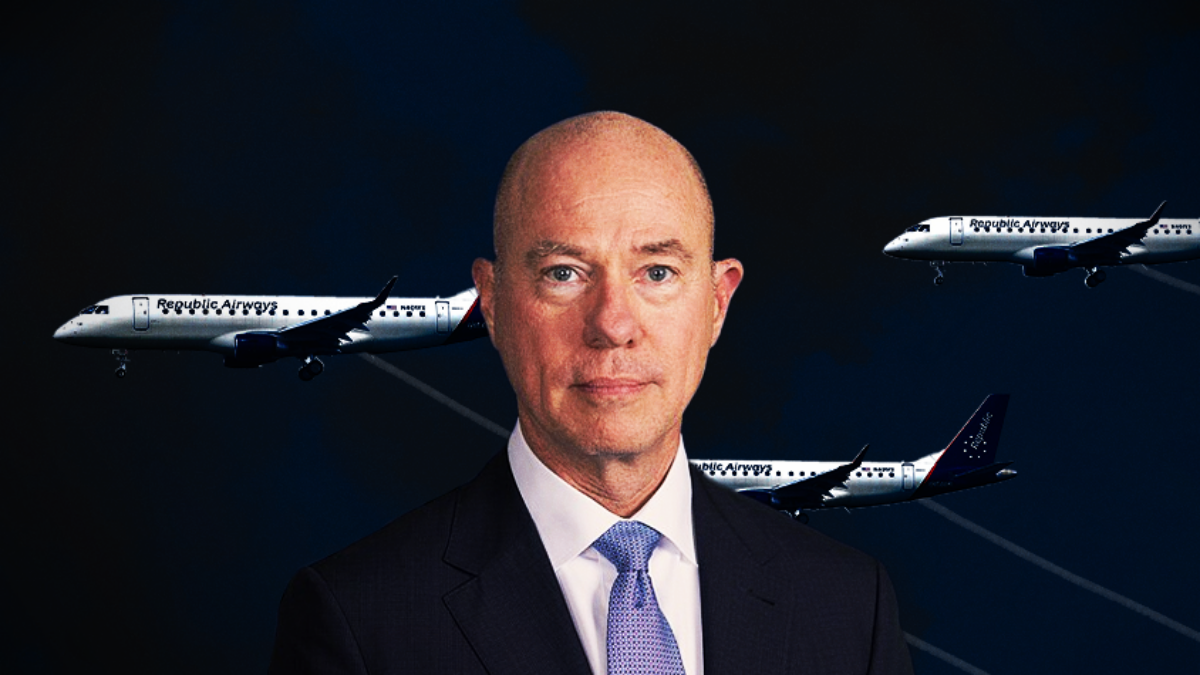
Federal Aviation Administration Administrator Bryan Bedford failed to abide by his pledge to divest his financial interests in an airline company within 90 days of taking office—conveniently providing him an apparent financial windfall after a merger—and has provided no assurances that he will recuse from matters involving the company where he worked for over two decades. CREW submitted a letter to the Senate Subcommittee on Aviation, Space, and Innovation, urging it to hold Bedford accountable in its upcoming hearing for apparently violating his ethics agreement and to ensure that he follows ethics rules designed to prevent personal financial interests from influencing agency decisions affecting airline passenger safety.
Bedford did not fully divest his financial interests in Republic, as promised, until months after the legal deadline to do so—following Republic Airways successful merger with Mesa Air Group, Inc. As a result of the merger, “Republic stockholders own approximately 88% of the combined company’s common stock.” The merger made Republic Airways a publicly traded company and led to “revenue growth of 20.6% in the fourth quarter of 2025,” meaning that Bedford’s delay in following the law and divesting his stock and equity interests seemingly allowed him to gain a significant financial windfall. Bedford’s failure to promptly divest his stock is a serious ethical lapse that undermines public trust in his leadership.
In his ethics agreement, Bedford also acknowledged that he received what ethics rules consider “an extraordinary payment” in connection with his departure from Republic Airways for a future government role. Ethics regulations prohibit officials who received “extraordinary payments” from their former employer before taking a government job from working on matters involving that employer for two years.
During his confirmation process, Bedford gave conflicting or, at best, unclear answers about whether he would recuse himself, for the duration of his five-year tenure, from some matters that would directly affect Republic Airways.
During Bedford’s time at Republic Airways, the company formally requested an exemption from a regulation requiring anyone applying for an airline transport pilot certificate to have at least 1,500 hours of pilot experience. The company hopes to cut the required training time in half, to 750 hours, saying this would help address a pilot shortage that has forced the airline to cut service and lose revenue. Congress adopted the 1,500-hour rule in 2010 after the tragic February 2009 crash of Colgan Air Flight 3407 in Buffalo, New York, which killed 50 passengers, pilots, and crew members. Congress described the rule as “an important safety measure that was missing from previous federal legislation” and noted that “evidence of the justification for this important policy adjustment has proved undeniable. […] [D]uring the years between the introduction of the new rule in 2010 and 2024, the related fatality rate dropped by 99.8 percent.”
Bedford’s failure to clearly commit to recusing himself from any FAA decisions related to Republic Airways for the duration of his tenure raises serious questions about his adherence to ethics rules, especially given his failure to promptly divest his financial interests in the company. More importantly, his lack of commitment creates a serious risk for airline passengers. The Subcommittee must ensure that Bedford recuses himself from any FAA decisions related to Republic Airways for the remainder of his tenure and closely examines his commitment to the safety of American air travelers, ensuring that his ethical lapses and lack of commitment do not endanger their safety and security.
Header airplane photo by AVA Navigate under a Creative Commons license
