January 6ers cost taxpayers $2.7 billion. Now they’re seeking secret payouts.
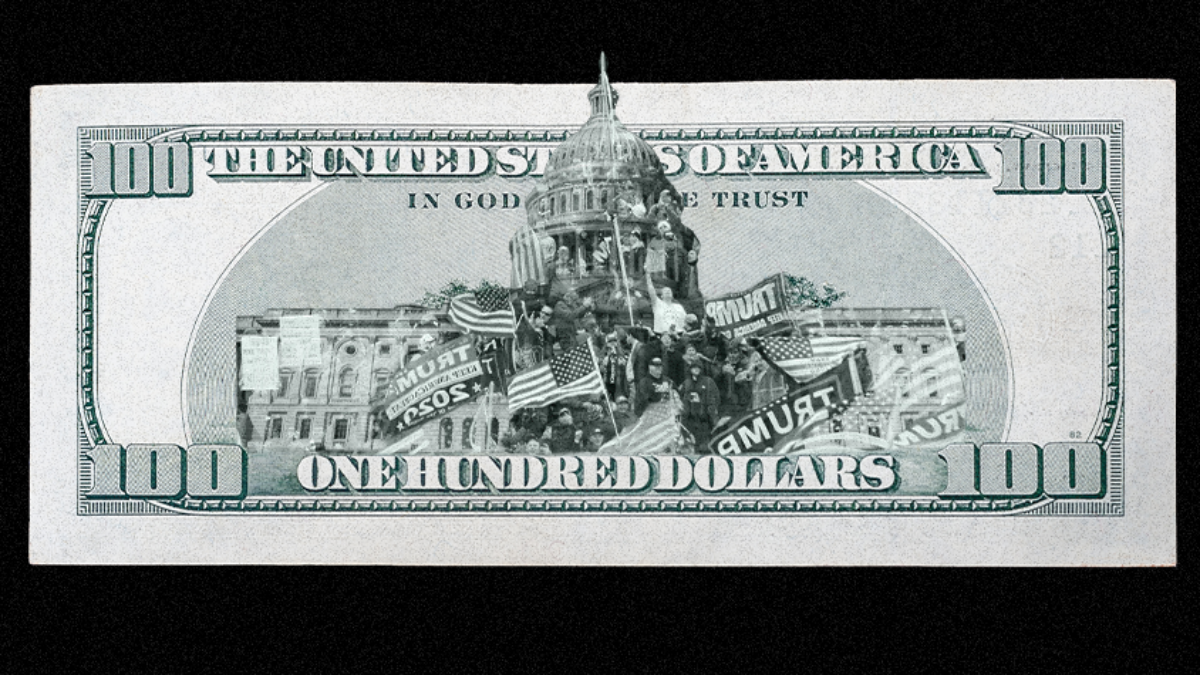
The January 6th attack on the Capitol left American taxpayers with billions in costs that were never recovered. Now emboldened by President Trump’s mass pardons and often with the administration’s support, convicted January 6th defendants are trying multiple avenues to extract more money from the government for their own benefit.
Courts and the court of public opinion have shut down many of these efforts, including by forcing the administration to backtrack on the Trump v. IRS slush fund that January 6th defendants planned to seek payouts from, with the president’s support. January 6th defendants are now pinning their hopes for recovery on the Federal Tort Claims Act (FTCA). Absent immediate congressional action to promote transparency and oversight of settlements, they may have found just the avenue they’re looking for to negotiate substantial and secretive payouts with the Trump administration, to the detriment of the American taxpayer.
The insurrection at the Capitol on January 6, 2021, cost American taxpayers some $2.7 billion in damage to buildings and grounds, federal and local law enforcement expenses and costs for investigations and bolstered security, according to the Government Accountability Office (GAO). If this cost was spread evenly across the approximately 1,270 individuals who either pled guilty to or were convicted at trial of January 6th-related crimes, each would owe the government more than $2.1 million.
Unfortunately, courts never came close to requiring them to pay back the full scope of the monetary damage inflicted. Instead, January 6th defendants were often sentenced to comparatively minimal restitution amounts of just $500 to $2,000 per person. As one federal judge pointed out, these small restitution amounts contrast with the “fairly aggressive” restitution the government commonly seeks in other cases.
Across all January 6th cases reported by the DOJ four years later, the Washington Post tallied that defendants were sentenced to a total of roughly $1.2 million in restitution and fines, leaving American taxpayers to account for the rest. The amount the government actually recovered was even smaller—according to early 2026 reporting by the Post, January 6th defendants had paid less than $665,000 in restitution. This amounts to restitution charges of just 0.044% of the Capitol attack’s estimated costs and actual repayment of a mere 0.025%.
President Trump’s sweeping pardons to January 6th defendants, issued on his first day back in office, eliminated any hope of collecting their outstanding restitution. Not satisfied, many pardoned January 6th defendants have attempted to reclaim what little they did pay into the public coffers, arguing in court that they are entitled to repayment of restitution, fines and fees from the very government they attacked.
Most courts have rejected these claims, with a significant majority concluding that a pardon provides no basis for the return of restitution and fees deposited into the Treasury based on Supreme Court precedent dating back to Knote v. United States in 1877. Nevertheless, the Department of Justice (DOJ) has supported pardoned January 6th defendants’ efforts to recover in multiple cases. An appeal of a decision rejecting efforts to recover is currently before the D.C. Circuit. Should that court allow repayment of January 6th defendants’ restitution, others may feel emboldened to file claims for recovery.
Some insurrectionists have pushed the matter further, filing claims seeking millions or even billions in damages based on alleged governmental wrongdoing in their criminal process. Courts have roundly rejected most such suits, including ones seeking $3.5 billion for alleged constitutional and Privacy Act violations, seeking $1 billion for alleged constitutional and Foreign Intelligence Surveillance Act violations, seeking $5 million based on the D.C. government’s alleged failure to issue dispersal orders during the Capitol attack and seeking $75 million for alleged malicious prosecution and constitutional violations.
Other January 6th defendants’ claims are still pending. Among these are a suit brought by five members of the Proud Boys, including four convicted of seditious conspiracy for their roles in organizing January 6th, seeking $100 million in damages for alleged malicious prosecution and other violations. Another outstanding January 6th defendant suit seeks $5 million based on claimed wrongful collection of DNA during an arrest.
Following a spate of decisions against January 6th defendants, the administration provided an opportunity for them to secure payouts while circumventing the courts through the nearly $1.8 billion so-called “anti-weaponization” slush fund, created through a purported “settlement” to President Trump’s collusive Trump v. IRS lawsuit. The fund was the culmination of a longtime effort, with President Trump himself previewing as early as March 2025 that “a lot” of government officials were talking about a compensation fund for January 6th defendants because they “really like that group of people.” According to an attorney representing January 6th defendants, as of early 2026, he had received “all positive responses” from DOJ officials in four meetings advocating for a compensation fund.
When the slush fund was ultimately created in May 2026, January 6th insurrectionists welcomed the fund as an alternative to overcoming the hurdles of litigation. Yet some argued they deserved more money. One defendant, whose efforts to recover $5 million in damages failed in court, told the New York Times that January 6th defendants “finally…feel like we’re getting a little something” with the announcement of the fund, but was critical of the amount of money available, stating, “this is chump change.” A lawyer representing January 6th defendants said that “doing the math” of dividing the nearly $1.8 billion fund by the number of potential claimants tempered their excitement: “the per capita number becomes pretty small.” Nevertheless, numerous January 6th defendants planned to apply, before bipartisan outrage and a court order forced the Trump administration to backtrack.
By the time Acting Attorney General Todd Blanche announced that the fund was purportedly “not moving forward,” at least six January 6th defendants had specified the amount they planned to seek through the fund, totaling $57 million, and many more had indicated an intent to apply.
The purported pullback of the slush fund and the bipartisan outrage that greeted it have not deterred insurrectionists or dampened the president’s underlying belief that January 6th defendants “should be reimbursed for a crooked government.” In another attempt to secure payouts, hundreds have filed administrative claims under the Federal Tort Claims Act, again seeking damages based on alleged governmental wrongdoing in their criminal process.
The FTCA allows plaintiffs to seek compensation from the federal government for certain torts, or legal wrongs causing injury, committed by federal employees. Experts understand that many January 6th claimants are alleging malicious prosecution as the basis for recovery, although courts unanimously rejected selective and malicious prosecution defenses when raised by January 6th defendants during their underlying criminal trials. The FTCA permits malicious prosecution claims to proceed where the government employee allegedly engaged in wrongdoing qualifies as an “investigative or law enforcement officer.”
The FTCA claims process may well be the avenue that January 6th insurrectionists have been looking for, allowing them to secretly negotiate with the Trump administration to settle their claims in exchange for substantial compensation.
Under the FTCA, claimants must first present tort claims to the federal agency allegedly responsible for the injury—in this case, likely the Department of Justice, which has already shown willingness to repay some pardoned January 6th defendants’ restitution and provide financial settlements to others. Claimants may not bring suit in court until that agency has “finally denied” the claim “in writing” or until six months have passed since its filing. The law thus not only permits, but encourages, agencies to settle these claims before a suit has been brought, including by making payments through the Judgment Fund.
“The FTCA claims process may well be the avenue that January 6th insurrectionists have been looking for, allowing them to secretly negotiate with the Trump administration to settle their claims in exchange for substantial compensation.”
But the settlement opportunity does not disappear once suits are filed in court. To the contrary, the Trump administration has authorized payouts through the Judgment Fund to key allies even after courts rejected their claims. For instance, in March, the Trump administration agreed to pay $1.25 million to settle an FTCA case filed in court in 2023 by former National Security Adviser Michael Flynn, alleging that Flynn was maliciously prosecuted for lying to federal agents. The Trump administration agreed to pay Flynn despite the fact that he had twice pleaded guilty to such charges, and a district court had already dismissed Flynn’s FTCA claims.
In April, the Trump administration agreed to pay another $1.25 million to settle a 2020 case involving FTCA claims brought by former Trump campaign aide Carter Page, even though both a district and appellate court had already heard and dismissed that case.
The public knows the details of these payments to Trump allies thanks to rigorous reporting. But FTCA settlements are often shrouded in secrecy. While the Treasury Department is statutorily required to publish details about settlements and judgments paid through the Judgment Fund, including individual claimants’ names and “a brief description of the facts that gave rise to the claim,” in practice, it does not release these details.
Instead, under both the Trump and Biden administrations, the Treasury Department has asserted that the Privacy Act prohibits disclosure of this information in all cases and, rather than the comprehensive information called for by statute, provided only limited details about Judgment Fund payments like the payment amount, agency involved, and a few-word description of the statute a claim was brought under. With only this information, the public will have little insight into whether or how the administration is using the FTCA claims settlement process to funnel dollars to January 6th insurrectionists.
In truth, settlement of FTCA claims brought by January 6th defendants could prove even more financially harmful than the Trump v. IRS slush fund. Where the slush fund was to be funded with a hefty nearly $1.8 billion, there is no limit to the Judgment Fund or cap on the amount an agency can pay out of it.
Proud Boys leader Henry “Enrique” Tarrio, convicted of seditious conspiracy for his role in the January 6th attack, acknowledged that if January 6th claimants just “settle[d] the[ir] tort claims and lawsuits,” they could receive “a lot more money in compensation” than the slush fund had to offer. And many insurrectionists already have multi-million dollar FTCA suits in progress in court.
In one, nine January 6th defendants seek a minimum of $1 million in damages each for alleged malicious, selective and vindictive prosecution and violations related to the government’s handling of their seized property. Another January 6th defendant convicted on a felony charge of assaulting, resisting or impeding officers using a dangerous weapon seeks a minimum of $2.5 million in recovery under the FTCA for alleged physical assault, intimidation and harassment by federal employees. A third group of 46 January 6th defendants has brought an FTCA suit based on underlying administrative claims totaling $18.4 million, alleging Capitol Police officers exposed them to unreasonable harm and physically assaulted them.
One January 6th defendant told the Wall Street Journal that he expects many more large-dollar cases to be filed—while some may have accepted smaller payments through the slush fund, he said, “Now we’re playing hardball.”
The Department of Justice has defended against at least one January 6th-related FTCA case in court and, according to one lawyer filing FTCA suits on behalf of January 6th claimants, has not responded to other administrative claims filed. But the administration has also shown a willingness to enter into settlement agreements around January 6th even where the DOJ has previously defended against such claims.
Already the administration has agreed to pay nearly $5 million to settle an FTCA claim brought by the family of Ashli Babbitt, who died after being shot by a Capitol Police officer while breaching an inner door of the Capitol on January 6th. The administration entered this settlement despite multiple prior federal investigations concluding that there was no evidence that the officer who shot Babbitt engaged in wrongdoing. The DOJ had previously vigorously defended against this suit, filing a motion to dismiss that was still pending in court when the Trump administration began and subsequently pivoted to settle with the Babbitt estate.
Following the public pushback on the Trump v. IRS slush fund, insiders report that the administration is interested in instead supporting and settling litigation that can fund payouts. Republican members of Congress have also acknowledged the FTCA as an alternative means of compensation. In June, encouraged by the late Senator Lindsey Graham to create a fund to pay individuals who bring weaponization claims under the FTCA, Associate Attorney General Stanley Woodward said, “We’re on it.” It thus may be only a matter of time before January 6th claimants begin to receive payouts from the Trump administration, under the guise of FTCA settlements.
This mechanism may be difficult for courts to stop, making it all the more important for Congress to immediately reform the Judgment Fund to ensure that January 6th insurrectionists can’t fill their coffers in secrecy at the expense of American democracy and the American taxpayer. Congressional action to clarify and expand Judgment Fund disclosure requirements, to require additional oversight and congressional or judicial review of large-dollar payments through the Judgment Fund and to impose additional safeguards on payments that result from potentially unscrupulous or collusive settlement agreements could help identify and mitigate potential wrongful payouts to January 6th defendants.
Photo by Brett Davis under a Creative Commons license.